Inert Alumina Ceramic Balls
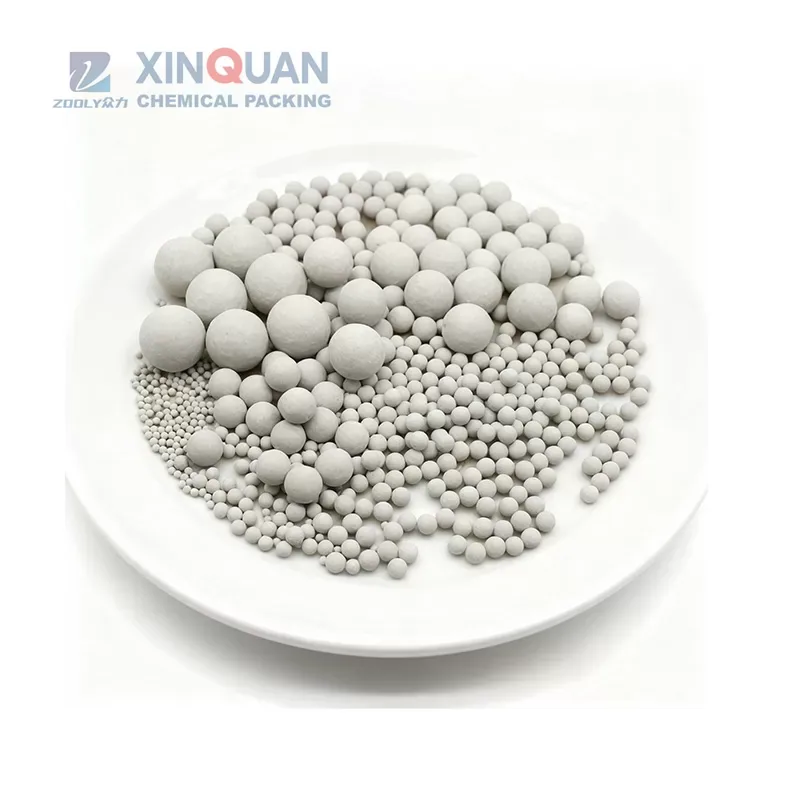
The inert ball layer is the least glamorous part of a reactor, and the one that decides whether the catalyst above it lasts its design cycle. Its jobs are to carry the bed load, filter fines before they blind the catalyst, spread gas and liquid across the section, and stay chemically silent while doing all of it. We supply inert alumina balls graded to the catalyst and the vessel, not a single grade for every duty.
Specifications
| Parameter | Detail |
|---|
| Form | Solid spheres, low porosity, non-absorbent |
| Function | Bed support, hold-down layer, flow redistribution, fine filtration |
| Grades | Standard inert and high alumina grades; porous grade listed separately |
| Grading | Multi-layer (coarse to fine) set against the catalyst size and vessel outlet |
| Key selection inputs | Bed load, process fluid, operating temperature, catalyst particle size |
| Typical arrangement | Coarse balls on the outlet collector, graduating up to a fine layer under the catalyst |
Available Materials
Inert alumina ceramic · High alumina ceramic · Porcelain / stoneware grade
Typical Applications
- Catalyst bed support in hydrotreaters, reformers and converters
- Hold-down layers above catalyst beds
- Sulphuric acid drying and absorption towers
- Claus unit and sulphur recovery reactors
- Gas and liquid filters, column bottoms, distillation reboilers
How the Options Compare
A graded inert ball layer does what a support grid cannot: it filters fines, spreads flow and protects the catalyst from thermal and mechanical shock. It costs more than a bare grid, adds height and some pressure drop, and has to be removed by vacuum or manually at turnaround — which is why the grading has to be right the first time.
Frequently Asked Questions
How many layers and what sizes should the support bed have?
The grading works upward from the outlet: coarse balls to carry load and leave free drainage, graduating to a finer layer that still passes gas but retains the catalyst. We set the layers from your catalyst size and vessel outlet detail rather than quoting a fixed grading.
What is the difference between inert and high alumina balls?
Alumina content governs refractoriness, crush strength and resistance to chemical attack. High alumina grades are chosen for higher temperature duty and heavier beds; standard inert grades cover the majority of support and hold-down applications.
Does porosity matter for a support ball?
Yes. A low-porosity ball will not soak up process liquid or absorb contaminants, so it stays inert and keeps its strength. Where absorption or a rough surface is actually wanted — for filtration or as a catalyst carrier — the porous grade is the correct choice instead.
Can the balls be re-used at the next catalyst change?
Often yes, if they are screened, washed free of fines and checked for breakage. We can quote replacement layers and screen the existing charge so only the damaged fraction is replaced.
More Ceramic Balls
High alumina balls for heavy catalyst beds, high temperature reactors and refractory duty. Higher crush streng…
Porous ceramic balls with open structure for gas filtration, flow distribution and as a catalyst carrier base.…
Wear resistant alumina grinding balls for ball mills and attritors. High density and low wear loss for mineral…
Ask about inert alumina ceramic ball
Tell us your flow rate, medium and operating conditions — we recommend the right packing and internals, and quote factory-direct.
Request a Quote WhatsApp