High Alumina Balls
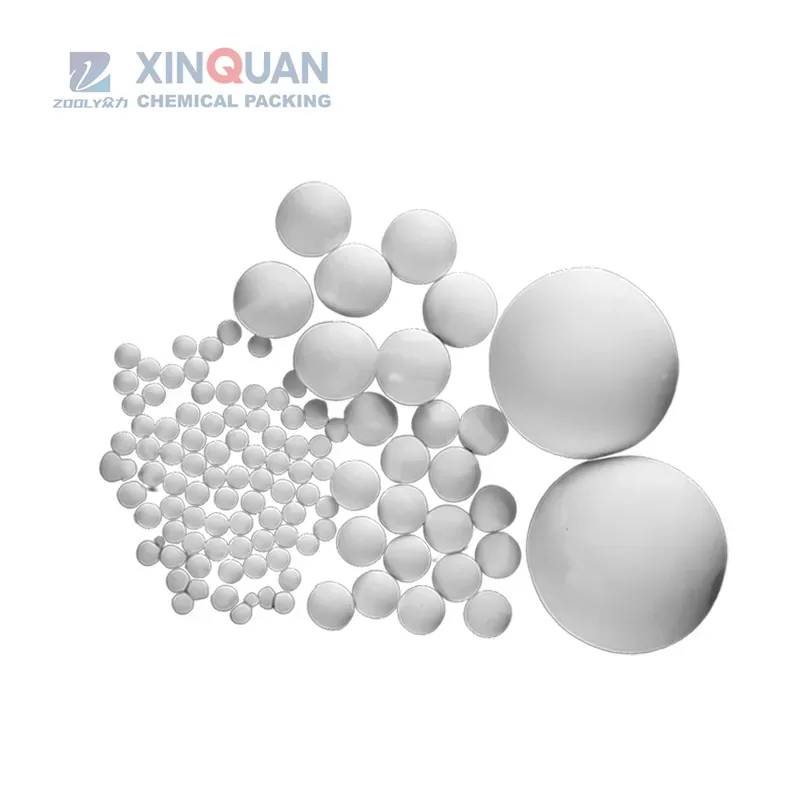
When the bed is heavy, the temperature is high, or the service involves thermal cycling that cracks ordinary porcelain, the support layer has to be made of something better. High alumina balls trade cost for crush strength and refractoriness, and they are the grade to specify where a standard inert ball would deform, spall or crush into fines.
Specifications
| Parameter | Detail |
|---|
| Form | Solid spheres, dense, low porosity |
| Grade | High alumina refractory grade |
| Compared with inert grade | Higher crush strength, higher service temperature, better thermal shock tolerance |
| Key selection inputs | Bed weight, operating and regeneration temperature, thermal cycling, fluid chemistry |
| Typical use | Bottom layers of deep beds, high temperature reactors, hot gas duty |
Available Materials
High alumina ceramic · Mullite-corundum type bodies
Typical Applications
- Deep catalyst beds with high bottom load
- High temperature reactors and converters
- Regeneration cycles with repeated thermal shock
- Refractory and heat storage duty
- Support layers beneath reforming and shift catalysts
How the Options Compare
A high alumina ball costs more per cubic metre than a standard inert ball and is unnecessary in ordinary support duty. It earns the premium where the load or the temperature would break a cheaper grade — replacing a crushed support layer at a turnaround costs far more than the difference in media price.
Frequently Asked Questions
When should I specify high alumina instead of inert alumina?
When the bottom layer carries a deep, heavy bed, when service or regeneration temperature is high, or when the vessel sees repeated thermal cycling. Below those conditions a standard inert grade is usually the economical choice.
Can high alumina balls be mixed with inert balls in one bed?
Yes, and it is common practice: the heaviest grade at the bottom where load is greatest, graduating to standard inert balls higher up. We design the layers together.
Do they resist acid service?
Alumina is not the right answer for strong acid duty — silica-bearing ceramics or other materials are used there. Tell us the medium and we will advise on the correct body rather than sell an unsuitable grade.
More Ceramic Balls
Inert alumina ceramic balls for catalyst bed support, hold-down and flow distribution in reactors, columns and…
Porous ceramic balls with open structure for gas filtration, flow distribution and as a catalyst carrier base.…
Wear resistant alumina grinding balls for ball mills and attritors. High density and low wear loss for mineral…
Ask about high alumina ball
Tell us your flow rate, medium and operating conditions — we recommend the right packing and internals, and quote factory-direct.
Request a Quote WhatsApp